Monday, 31 October 2011

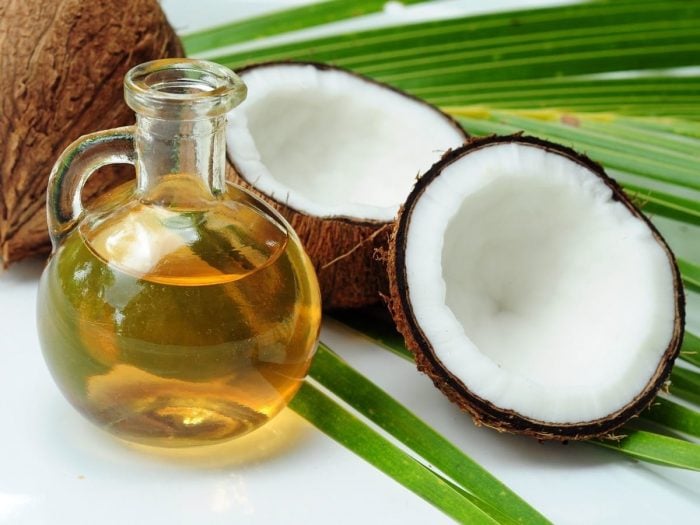
Coconut oil for the skin and hair


This article is written by Kiran Patil


Health Benefits of Coconut Oil


The health benefits of coconut oil include hair care, skin care, stress relief, maintaining cholesterol levels, weight loss, increased immunity, proper digestion and metabolism, relief from kidney problems, heart diseases, high blood pressure, diabetes, HIV and cancer, dental care, and bone strength. These benefits of coconut oil can be attributed to the presence of lauric acid, capric acid and caprylic acid, and its properties such as antimicrobial, antioxidant, antifungal, antibacterial, soothing, etc.

How is Lauric Acid Used by our body?

The human body converts lauric acid into monolaurin which is claimed to help in dealing with viruses and bacteria causing diseases such as herpes, influenza, cytomegalovirus, and even HIV. It helps in fighting harmful bacteria such as listeria monocytogenes and heliobacter pylori, and harmful protozoa such as giardia lamblia. As a result of these various health benefits of coconut oil, though its exact mechanism of action was unknown, it has been extensively used in Ayurveda, the traditional Indian medicinal system. The Coconut Research Center has compiled various references on scientific research done on coconut oil.
Before we move on to the benefits of coconut oil in detail, let us understand its composition.

Composition of Coconut Oil:

Coconut oil consists of more than ninety percent of saturated fats (Don’t panic! First read to the last word. Your opinion may change), with traces of few unsaturated fatty acids, such as monounsaturated fatty acids and polyunsaturated fatty acids. Virgin Coconut Oil is no different from this. Let us have a bit detailed study of this.


  • The Saturated Fatty Acids: Most of them are Medium Chain Triglycerides, which are supposed to assimilate well. Lauric Acid is the chief contributor, with more than forty percent of the share, followed by Capric Acid, Caprylic Acid, Myristic Acid and Palmitic.
  • The Polyunsaturated Fatty Acids: Linoleic Acid.
  • The Monounsaturated Fatty Acids: Oleic Acid.
  • The Poly-phenols: Gallic Acid, which is phenolic acid. These poly-phenols are supposed to be responsible for the fragrance and the taste of Coconut Oil and Virgin Coconut Oil is rich in these poly-phenols.
  • Certain derivatives of fatty acid like Betaines, Ethanolamide, Ethoxylates, Fatty Esters, Fatty Polysorbates, Monoglycerides and Polyol Esters.
  • Fatty Chlorides, Fatty Alcohol Sulphate and Fatty Alcohol Ether Sulphate, all of which are derivatives of Fatty Alcohols.
  • Vitamin-E and Vitamin K and minerals such as Iron.
Let us now explore the benefits of coconut oil in detail:

Hair Care:

Coconut oil is one of the best natural nutrition for hair. It helps in healthy growth of hair providing them a shiny complexion. Regular massage of the head with coconut oil ensures that your scalp is free of dandruff, lice, and lice eggs, even if your scalp is dry. Coconut oil is extensively used in the Indian sub-continent for hair care. It is an excellent conditioner and helps in the re-growth of damaged hair. It also provides the essential proteins required for nourishing damaged hair. It is therefore used as hair care oil and used in manufacturing various conditioners, and dandruff relief creams. Coconut oil is normally applied topically for hair care.

Skin Care:

Coconut oil is excellent massage oil for the skin as well. It act as an

effective moisterizer on all types of skins including dry skin. The

benefit of coconut oil on the skin is comparable to that of mineral oil. 

Further, unlike mineral oil, there is no chance of having any adverse 

side effets on the skin... Coconut oil, therefore, is a safe solution fro 

preventing dryness and flaking skin. It also delays wrinkles, and 

sagging of the skin... Coconut oil also helps in treating various skin 

problems... including psoriasis, dermatitis, eczema and other skin 
infections... 

Coconut oil also helps in preventing premature aging and degenerative deceases due to its antioxidant properties.


There is a misconception spread among many people that coconut oil is not good for the heart. This is because it contains a large quantity of saturated fats. However, coconut oil is beneficial for the heart. It contains about 50% lauric acid, which helps in preventing various heart problems including high cholesterol levels and high blood pressure. The saturated fats present in coconut oil are not harmful as it happens in case of other vegetables oils. It does not lead to increase in LDL levels. It also reduces the incidence of injury in arteries and therefore helps in preventing atherosclerosis.

Weight Loss

Coconut oil is very useful in reducing weight. It contains short and medium-chain fatty acids that help in taking off excessive weight. It is also easy to digest and it helps in healthy functioning of the thyroid and enzymes systems. Further, it increases the body metabolism by removing stress on pancreases, thereby burning out more energy and helping obese and overweight people reduce their weight. Hence, people living in tropical coastal areas, who eat coconut oil daily as their primary cooking oil, are normally not fat, obese or overweight.

Digestion

Internal use of coconut oil occurs primarily as cooking oil. Coconut oil helps in improving the digestive system and thus prevents various stomach and digestion related problems including irritable bowel syndrome. The saturated fats present in coconut oil have anti microbial properties and help in dealing with various bacteria, fungi, parasites, etc., that cause indigestion. Coconut oil also helps in absorption of other nutrients such as vitamins, minerals and amino acids.

Immunity:

Coconut oil is also good for the immune system. It strengthens the immune system as it contains antimicrobial lipids, lauric acid, capric acid and caprylic acid which have antifungal, antibacterial and antiviral properties. The human body converts lauric acid into monolaurin which is claimed to help in dealing with viruses and bacteria causing diseases such as herpes, influenza, cytomegalovirus, and even HIV. It helps in fighting harmful bacteria such as listeria monocytogenes and heliobacter pylori, and harmful protozoa such as giardia lamblia.

Healing and Infections

When applied on infections, it forms a chemical layer which protects the infected body part from external dust, air, fungi, bacteria and virus. Coconut oil is most effective on bruises as it speeds up the healing process by repairing damaged tissues.
Infections: Coconut oil is very effective against a variety of infections due to its antifungal, antiviral, and antibacterial properties. According to the Coconut Research Center, coconut oil kills viruses that cause influenza, measles, hepatitis, herpes, SARS, etc. It also kills bacteria that cause ulcers, throat infections, urinary tract infections, pneumonia, and gonorrhea, etc. Coconut oil is also effective on fungi and yeast that cause candidiasis, ringworm, athlete's foot, thrush, diaper rash, etc.

Other:

Liver: The presence of medium chain triglycerides and fatty acids helps in preventing liver diseases as they substances are easily converted into energy when they reach the liver, thus reducing work load on the liver and also preventing accumulation of fat.
Kidney: Coconut oil helps in preventing kidney and gall bladder diseases. It also helps in dissolving kidney stones.
Pancreatitis: Coconut oil is also believed to be useful in treating pancreatitis.
Stress Relief: Coconut oil is very soothing and hence it helps in removing stress. Applying coconut oil to the head followed with a gentle massage helps in removing mental fatigue.
Diabetes: Coconut oil helps in controlling blood sugar, and improves the secretion of insulin. It also helps in effective utilization of blood glucose, thereby preventing and treating diabetes.
Bones: As mentioned earlier, coconut oil improves the ability of our body to absorb important minerals. These include calciumand magnesium which are necessary for development of bones. Thus coconut oil is very useful to women who are prone to osteoporosis after middle age.
Dental Care: Calcium is an important element present in teeth. Since coconut oil facilitates absorption of calcium by the body, it helps in getting strong teeth. Coconut oil also stops tooth decay.
HIV and Cancer: It is believed that coconut oil plays an instrumental role in reducing viral susceptibility of HIV and cancer patients. Preliminary research has shown indications of the effect of coconut oil on reducing the viral load of HIV patients (Reference).


Finally, coconut oil is often preferred by athletes and body builders and by those who are dieting. The reason behind this being that coconut oil contains lesser calories than other oils, its fat content is easily converted into energy and it does not lead to accumulation of fat in the heart and arteries. Coconut oil helps in boosting energy and endurance, and enhances the performance of athletes.


Saturday, 29 October 2011

Aging is a state of mind


How old do you feel inside?

Chicago Tribune
10-17-11
Those of us lucky enough to grow old must contend with the miserable stereotypes of what it's like: the frailty, the forgetfulness, the early bird specials.
But in aging, as in many things, attitude can make all the difference. Research has shown that how people feel inside, and their expectations of their capabilities, can have a greater impact on health, happiness and even longevity than the date on their birth certificates.
In her seminal "counterclockwise" study, in 1979, Harvard University psychologist Ellen Langer brought men in their 70s and 80s to a weeklong retreat that was retrofitted, from the music to the newspapers, to look and feel like 1959. One group of men was told to reminisce about the era. The other group was told to let themselves be who they were 20 years earlier.
By the end of experiment, both groups of men, who upon entering had been highly reliant on relatives to do things for them, were functioning independently, actively completing chores, and showed significant improvements in hearing, memory, strength and intelligence tests. The group told to behave like they were 20 years younger also showed better dexterity, flexibility and looked younger, according to outside observers who judged photos of the participants taken before and after the retreat.
Expectation, not biology, leads many elderly people to set physical limits on themselves, Langer concluded; they assume they'll fall apart, so they let it happen.
"What we want to do is not get older people to think of themselves as young, but to change their mindsets about what it means to be older," Langer said. And being older doesn't have to equal decay.
Take memory. Thirty-year-olds forget lots of things, but they don't blame dementia. Older people jump to the conclusion that memory failures are part of their inevitable decline, when in fact it could be that their values change about what's meaningful enough to remember, Langer said.
Rather than declare failure when they aren't as nimble on the tennis court or spry on the stairs as they used to be, older people should recognize that anything is still possible; they just may have to try a few different strategies, Langer says.
Internalizing negative stereotypes about aging can have dire health consequences, even among the young, some studies suggest.
Men and women older than 50 with more positive self-perceptions of aging lived 7.6 years longer than those with negative perceptions, according to a 2002 study led by Yale University epidemiology and psychology professor Becca Levy. Young, healthy people younger than 50 who held negative attitudes toward the elderly were more likely to experience a cardiovascular disorder over the next four decades than their peers who had more positive view of the elderly, a 2006 study by Levy found.
Pessimism about elderly decline, the researchers suggest, becomes a self-fulfilling prophecy.
Other studies that look at age identity -- also known as subjective, or felt, age -- have found that feeling younger than you really are is linked to better health, life satisfaction and cognitive abilities.
It's not clear what comes first: If identifying as younger makes you vital and sharp, or if people who feel vital and sharp associate that with feeling younger, said Markus Schafer, assistant professor of sociology at the University of Toronto, who last year published a study on age identity while a graduate student at Purdue University.
His study, in which people on average felt 12 years younger than their actual age, found subjective age was more important than chronological age in predicting performance on memorization and other mental tasks 10 years later. The cognitive benefits of feeling young were slightly more pronounced among women, he said, perhaps because of greater pressure on women to maintain youthfulness.
Regardless of what causes the correlation, he said, there's benefit to staying engaged.
"Learning new things, reading in a new area, at least trying to become connected with new technologies and platforms: Those are ways people can feel connected with the ebb and flow of the world," Schafer said.
The concept of "feeling younger" can be misleading: People usually mean that they feel healthier than they expected to feel at a particular age, not that they're denying their age or yearning for youth, said Laura Carstensen, founding director of the Stanford Center on Longevity. When asked in studies how old they'd like to be, most people say they wish to be 10 years younger -- 70-year-olds want to be 60, 60-year-olds wish to be 50 -- because they'd be healthier. No one wants to be 20, she said.
More important than reversing the clock is to be optimistic about it, she said. And aging does have its upsides.
Emotional satisfaction and stability tend to improve as people get older, despite sad events like losing friends or social status, Carstensen said. Because time seems short, elderly people focus on what matters most to them, such as personal relationships, rather than flailing about in the uncertain what-ifs of youth, she said. It's not a happy-go-lucky happiness, but a deeper sense of gratitude.
"The misery myth is one of the most pernicious myths, because when you think the future is really bleak you don't plan," Carstensen said. "When you think, 'I'm going to be the coolest 80-year-old and will start a line of clothing for old people,' there is so much possibility."

Friday, 28 October 2011

Plastic bottles and containers


How plastic food containers could be making you fat, infertile and sick

In previous articles herehere and here, I wrote about the dangers of an environmental toxin called bisphenol-A (BPA). BPA is a chemical that is found in several plastics and plastic additives. It’s in the water bottles some folks carry to gyms, the canned tomatoes and coconut milk they cook with, and in the baby bottles moms use to feed their infants.
We’ve known for decades that BPA has estrogenic activity. In vivo animal studies and in vitro cell-culture research has linked low-level estrogenic activity associated with BPA exposure to all kinds of fun stuff, like diabetes, ADHD, heart disease, infertility and cancer.
There is now significant evidence suggesting that even low levels of BPA-exposure can cause harm, and this is particularly true in vulnerable populations like pregnant women, infants and the chronically ill. (1)
Because of this research, and the growing public awareness that BPA should be avoided, a new crop of “BPA-free” plastic food containers and baby bottles has been introduced. However, a recent study published in the journalEnvironmental Health Perspectives in July has shown that even BPA-free plastics have chemicals with estrogenic activity (EA), and can cause serious health problems as a result. (2)

What is “estrogenic activity” (EA)?

Chemicals with estrogenic activity (EA) are those that mimic or antagonize the actions of naturally occurring estrogens. These chemicals are capable of binding with one or more of the nuclear estrogen receptors in the body.
The best way to think of chemicals with EA is as a counterfeit key fitting into a loose lock. When these chemicals activate the estrogen receptor, they produce an increase in circulating estrogen, which in turn can cause problems such as early puberty in females, reduced sperm counts, altered function of the reproductive organs, obesity, increased rates of certain cancers and problems with infant and childhood development. (3)
As I mentioned above, vulnerable populations such as pregnant women, developing fetuses, infants and children are especially sensitive to even very low doses of chemicals with EA. (4)

BPA-free is not EA-free

In the Environmental Health Perspectives study, Yaniger et al. set out to determine the estrogenic activity of commonly used plastic consumer products.
They bought more than 500 plastic products at places like Wal-Mart, Whole Foods, Trader Joe’s, Target, and other major retailers. They selected from all categories of plastic, including tupperware containers, bags and wraps.
Then they cut the containers into pieces, put them into liquids that contain similar chemicals found in food and drinks, and subjected them to stresses that mimic normal use, like UV light (sunlight), microwaving, or moist heat (like boiling or dishwashing).
Their results showed that over 90 percent of the products leached estrogenic chemicals before they were even stressed, and after being stressed essentially all of the products showed estrogenic activity.
According to Stuart Yaniger, one of the lead authors of the study:
Baby bottles, plastic bags, plastic wrap, clamshell food containers, stand-up pouches: Just about anything you can think of that’s made of plastic that food or beverages are wrapped up in, we found this activity. It was shocking to us.

What plastics do and don’t have EA? It’s impossible to tell.

Perhaps the most troubling outcome of this study is that it’s currently impossible to determine which consumer plastic products are likely to have chemicals with EA, and which are not. The exact chemical composition of most plastic products is proprietary and thus not known, and a single plastic item containing many parts (e.g. a baby bottle) may consist of >100 chemicals, all of which can leach from the product.
In light of the researchers’ finding that nearly all of the 500 plastic products they tested leached when stressed, and 90 percent of them leached even without stress, I think it’s pretty safe to assume that most plastic products you can buy in the store have chemicals with EA.
It’s important to reiterate that this is true even with BPA-free plastics. In fact, the Environmental Health Perspectivesstudy found that some BPA-free products had even more EA than BPA-containing products!

Should you be concerned about chemicals with EA?

There are still a lot of unknowns in the discussion of the EA of various chemicals in plastic products, such as the number of chemicals having EA, their relative EA, their release rate under different conditions, and their half-lives in human beings of different ages.
However, there are 3 strong arguments for being “better safe than sorry” when it comes to plastics and EA (5):
  • in vitro data overwhelmingly show that exposures to chemicals with EA (even in very low doses) change the structure and function of human cell types;
  • many studies present clear cellular, molecular and systemic mechanisms by which chemicals having EA produce changes in cells, organs and behaviors; and,
  • recent epidemiological studies strongly suggest that chemicals with EA produce measurable changes in the health of various human populations.
Perhaps the study authors summed it up best in their conclusion:
Many scientists believe that it is not appropriate to bet our health and that of future generations on an assumption that known cellular effects of chemicals having EA released from most plastics will have no severe adverse health effects.
I couldn’t agree more.

What you can do to reduce your exposure to chemicals with EA

Here’s a list of things you can do to reduce your exposure – and especially your baby’s and children’s exposure – to chemicals with EA.
  • Use glass tupperware containers and canning jars at home for food storage (make sure to get BPA-free lids for the canning jars – the lids that Mason jars come with contain BPA.)
  • Use stainless steel containers in the freezer instead of freezer bags.
  • Use a stainless steel water bottle (like the Klean Kanteen) instead of plastic bottles.
  • Don’t drink bottled water from plastic bottles, especially when they’ve been exposed to sunlight.
  • Parents: use glass baby bottles instead of plastic. Evenflo is a commonly available brand you can buy at Target, Wal-Mart, Walgreens, Rite-Aid, etc. and online at Amazon and other retailers.

Resources for those who want to avoid plastic entirely

Tuesday, 25 October 2011

On synchronicity


(from the Power of Flow) 


A Wink from the Cosmos," by Meg Lundstrom
(Intuition Magazine, May 1996)


Earl was trying to track down an out-of-print book called The Adventures of Marco Polo. He scoured two used book stores in New York City, had no success, and caught a taxi to a third. The cab driver was unusually chatty, and during their conversation, Earl glanced at his license on the dashboard. His name? Marco Polo!
Art was sitting at his computer typing an e-mail missive when his cat Coal jumped from his lap onto the keyboard. Before Art's startled eyes, as the cat shifted from key to key, its paws tapped out the word emerson on the screen. "To make it even weirder, I've been studying Ralph Waldo Emerson intently for the past year, and the study has taken on a very symbolic meaning to me," he says, still in shock. "My wife was sitting next to me at the computer, and if I'm sent away for being crazy, she has to go, too!" 
The uncanny coincidence. The unlikely conjunction of events. The startling serendipity. Who hasn't had it happen in their life? You think of someone for the first time in years, and run into them a few hours later. An unusual phrase you'd never heard before jumps out at you three times in the same day. On a back street in a foreign country, you bump into a college roommate. A book falls off the shelf at the bookstore and it's exactly what you need.
Is it only, as skeptics suggest, selective perception and the law of averages playing itself out? Or is it, as Carl Jung believed, a glimpse into the underlying order of the universe? He coined the term synchronicity to describe what he called the "accusal connecting principle" that links mind and matter. He said this underlying connectedness manifests itself through meaningful coincidences that cannot be explained by cause and effect. Such synchronicities occur, he theorized, when a strong need arises in the psyche of an individual. He described three types that he had observed: the coinciding of a thought or feeling with an outside event; a dream, vision or premonition of something that then happens in the future; and a dream or vision that coincides with an event occurring at a distance. No one has come up with a definition that has superseded his, although there has been debate on whether events linked to precognition and clairvoyance should be included as synchronicity.
Some scientists see a theoretical grounding for synchronicity in quantum physics, fractal geometry, and chaos theory. They are finding that the isolation and separation of objects from each other is more apparent than real; at deeper levels, everything -- atoms, cells, molecules, plants, animals, people -- participates in a sensitive, flowing web of information. Physicists have shown, for example, that if two photons are separated, no matter by how far, a change in one creates a simultaneous change in the other.
Whatever its cause, the appeal of synchronicity runs deep. "People love mysterious things, and synchronicity is like magic happening to them," says Carolyn North, author of Synchronicity: The Anatomy of Coincidence (Regent Press). "It gives us a sense of hope, a sense that something bigger is happening out there than what we can see, which is especially important in times like this when there are so many reasons for despair."
The more pragmatic a person, the greater a surprise a synchronistic incident is -- even mild ones of the sort that happen to most people sooner or later. For example, Bruce, a corporate lawyer, was stunned the day that, just as he was getting ready to dial his father, he picked up the phone and heard his father's voice on the other end -- calling him. "I said, 'Holy smokes!' We were both dumbfounded!" he recalls. For a moment in time, synchronicity shattered their assumptions of cause-and-effect reality.
Some people, however, would shrug and call this intuition. How are the two different?
At first blush, synchronicity and intuition seem to be separate phenomena. Synchronicity happens "out there": against the odds, something in the Universe seems to swing into place to answer an inner need we have. Intuition happens "in here": it's an inner knowing, an ability to tune into knowledge in a nonrational, nonlinear way. We know something but we don't know how we know it.
Yet the boundaries get fuzzy very quickly. Jung's definition of synchronicity clearly incorporates precognition and clairvoyance, which, by some people's definition, are also types of intuition: they are certainly inner knowing. For example, here's a mind-boggling synchronicity story that is just as mind-boggling when viewed as an intuition story. Pam's father was chopping down a tree for firewood when it suddenly fell on him, crushing the left side of his face almost beyond recognition and shattering his back. Against all odds, he shoved the tree off of himself and walked a mile for help. Pam flew to Ithaca, New York, to be with him. It wasn't until weeks later, when she had returned to New York City, that she picked up the tablet she had been taking notes on in class at the time the accident had happened. She had been idly doodling in the margins -- and her drawings included a face with the left half shaded in black and a person's back with two Xs on the spine, marking the same vertebrae that her father had broken.
If we eliminate Jung's two psi-related definitions and just focus on the coinciding of inner and outer events in a way that defies causal explanation, there can still be an overlapping, because the inner event can be an intuitive hit. In practice, synchronicity and intuition sometimes seem so intertwined that it's hard to tell where one leaves off and the other begins.
Shelley was sitting at Notre Dame in Paris giving her sore feet a rest. The shoes she had worn from the States had turned out to be painful, and her limited budget didn't allow her to buy another pair. Suddenly she felt an inner prompting, and she got up, walked out of the church, and turned left. Following her promptings, she made several other turns to arrive at a square. There, on top of a trash can, sat a pair of brand new black boots with no signs of wear -- in exactly her size. "It was perfect," she said. "If they had been inside the trash can, I wouldn't have pulled them out. If they had been worn before, I wouldn't have put them on. And they were so stylish I never could have afforded them myself!"
So is this an intuition story or a synchronicity story? Intuition got her to the boots. Synchronicity provided her with precisely what she needed: she was virtually handed the boots by the Universe.
Some synchronicities are not the delivery of objects but of insights: something in the outer world crystallizes or confirms an inner process. Those synchronicities can "feel" much like intuition: it's sudden information perceived by the psyche and experienced as true. "They're both messages, but one is internal and one external," says John Graham, a former foreign officer who with his wife, Ann Medlock, runs the Giraffe Project, an intrepid organization in Langley, Washington, that recognizes people who stick their necks out for the common good. The organization lives hand to mouth on donations, but John intuitively knows when a big check is in the morning mail, and the amount is often synchronistically the exact amount they need to pay a pressing bill. "Synchronicity and intuition are saying the same thing, it's just as if one were speaking French and the other Spanish," he says.
David Spangler, an author, teacher, and former guiding light of Findhorn, believes the two have many underlying similarities. "Intuition is another form of synchronicity: When I intuit something, there's no apparent cause-and-effect relationship between my knowledge and how I got the knowledge," he says. "Likewise, synchronicity is precipitated intuition: we know of a connection not inwardly but outwardly, through action and perception. In both cases, the pattern carries the same message: we live in a world more intricately and holistically organized than we may ever have previously supposed."
Ultimately, it seems that our perception of the two is based on how we experience the boundary between our inner and outer environments. The more we feel a part of all around us, the more we engage in a dance of energy and input from all sides. At that point, it doesn't matter, except as a point of passing interest, where the information comes from: it just comes.
Yet, until we live at that exalted level of consciousness, we can make good use of the interplay between the two. For example, some people develop their intuition using synchronicity as a tool. They follow an inner urge or message and watch for the results: if a meaningful coincidence results, it is a sign to them that they're on the right track and that they can trust that voice in the future. For instance, Kathleen was driving toward the mountains for a hike when she made a split-second decision to go to a pottery studio instead. "I don't know why -- it just felt right," she says. She had thought about stopping there before but had never gotten around to it. Just as she walked in the door, a woman was putting the finishing touches on a large ceramic pot. "It's a drum," she told Kathleen, "But I don't know anything about putting a skin on it." "I've make drums!" exclaimed Kathleen. "I know where to get the skins!" They quickly agreed to collaborate; in exchange, the woman will give her lessons. "It confirmed my intution," says Kathleen, "and let me know that pottery is something I should definitely pursue."
Conversely, some people make active use of intuitive skills to garner useful coincidences. Ray Simon, a Massachusetts writer, is constantly scanning the environment for oddities; he runs quick intuitive checks on them and follows where they lead him, often with fortuitous outcomes. For example, he was at a library looking up material on Alfred North Whitehead. A computer search listed 12 references, the third of which was blank. He pulled up the information on the third, found out that it actually referred to a book on Sartre, and so went to the shelves to find it. "These things are annoying to follow," he says with a laugh. "Your reasonable mind wants to do things that make sense." Next to that book was a different one on Sartre, a comic book that laid out his philosophy in a whimsical format. "I needed that information because I write computer manuals, and it's an ongoing battle to stay light," he says. "That book enriched my life and expanded my thinking about what could be done."
There's something about turning one's choices over to intuition that seems to avail oneself to synchronicity," says Allan Combs, Ph.D., a psychology professor at the University of North Carolina at Asheville who co-authored Synchronicity: Science, Myth and the Trickster (Marlowe). "In practice, that can mean moving from moment to moment when making decisions, even small decisions -- especially small decisions! If you expect the unexpected, synchronicity will emerge."
Intuition, researchers have found, flourishes in a person who is open, receptive and nonjudgmental. Synchronicity has had little research -- it defies laboratory tests, of course -- but people who have studied the topic report a phenomena which Alan Vaughan, author ofIncredible Coincidence: The Baffling World of Synchronicity (Ballantine) calls "the synchronicity of synchronicity." Just having an active interest in the matter seems to make synchronicities happen more often -- in part, of course, because we notice them more.
Likewise, synchronicity too seems to be dampened by cynicism and doubt. Although some synchronistic events, like some intuitive hits, cannot be easily ignored, others are of a subtler nature -- almost dreamlike in their metaphorical patterns -- and it takes practice both to notice and decode them.
In her book The Tao of Psychology: Synchronicity and the Self (HarperCollins). Jean Shinoda Bolen writes about being at a dinner party with friends when one woman raised a question: Occasionally, when she closed her eyes, frightening demonic images would appear. Should she confront them? examine them? immediately turn her attention elsewhere? As they discussed the matter, a skunk started scratching at a sliding glass door in front of them, trying to get inside.The hosts had never seen a skunk in the area, and after discussing how odd it was to see one trying to approach people, they joked about how unlikely it was that anyone would open a door to one. It was only later that Jean and her husband realized that the skunk provided a synchronistic answer to their question: Just as a skunk would stink up a living space, allowing demonic images in would do the same to one's inner space.
Says North: "If your belief system is such that intuition and synchronicity are real and significant, you will notice them. If your belief system is that they're hogwash, you won't."
Belief systems also dictate what people attribute the workings of synchronicity to. When it occurs, they may thank their luck, or fate, or destiny, or karma, or a miracle, or angels, for example. "Synchronicity happens when God wishes to remain anonymous," goes one saying. Carrie and Dan view as divinely inspired the string of happy coincidences that have allowed them to adopt and raise eleven disabled children on Dan's salary as a school cafeteria worker. One month, hit with several emergencies, they had no money to pay rent -- until lightning struck, hitting two of their trees. When the insurance adjuster came by, he wrote out a check so they could have them taken down, but he said to Carrie with a smile, "If I were you, I wouldn't bother taking those trees down -- you're only going to lose a branch." The check exactly covered their rent. Said Carrie: "We thanked God. We walk in his shadow."
As was true with Carrie and Dan, synchronicity seems to appear often at times of personal crises and at such passage points as births and deaths. Sunbathing on a Caribbean beach with her friend Sandy, Mary found herself thinking sadly about Beth, a mutual friend of theirs who had died unexpectedly two weeks earlier. Softly, she started humming "Amazing Grace." When she finished, Sandy said, "That's so strange. I was just thinking about Beth, and `Amazing Grace' was her favorite song." Mary was stunned: she had never associated the song with Beth. They later learned that at the exact time Mary had been humming, Beth's family had been holding a private memorial for her.  
"Synchronicity seems to happen when you're intensely caught up in something that's very deep -- for instance, falling in makes it pop all over the place," says Combs. "A lot of activities that tap into the deep mystery of life -- things like meditation, contemplative prayer -- also seem to stir it up."
Synchronicities are sometimes regarded as signs, and some people consciously use them to make decisions in life. In the novel The Celestine Prophecy, a bestseller which thrust synchronicity into the public consciousness, James Redfield says that all coincidences are significant because they point the way to an unfolding of our personal destiny.
MaryAnn had moved to London to live with her boyfriend, only to discover that she hated the city and that he had a nasty streak. One morning at 6 a.m., after a tearful fight with him, she fled the house and was out walking the dank, grey streets, feeling completely miserable. Suddenly a dead bird fell out of the sky and landed at her feet with a plop. "That did it," she says. "It was a sign from the Universe and it was shouting, `Go home!' And I did."
Often synchronicities are simply a lark, a wink from the cosmos. Rebecca, a screenwriter, was researching the life of a mysterious woman, a famous writer's lover who had died tragically at a young age. Driving to Boston to view the writer's archives, Rebecca on a whim stopped off at the sprawling cemetery in the woman's home town, and quickly chanced upon her gravestone. On top of it was sitting a rabbit, its pink nose quivering. At the sight of Rebecca, it started skittering around in circles. In Boston a few hours later, she was reading through the writer's diaries when in the margin of a page, she came upon a few lines of curlicue, schoolgirlish handwriting, which she recognized as being the young woman's. The words? "Thank God for the rabbits and their funny little habits."


Monday, 24 October 2011

Exercise and fasting for rejuvination

(NaturalNews) The latest science has proven that a special protein called mTOR (mammalian target of rapamycin) holds the key to muscle building and rejuvenation. Dysregulation in mTOR pathway leads to accelerated aging and early mortality. Certain natural lifestyle interventions modulate and stabilize this powerful mTOR pathway.

When mTOR is activated, it causes muscle cells to increase protein synthesis. This leads to skeletal muscle hypertrophy. mTOR integrates cellular information regarding intracellular nutrient status and energy and oxidative stress levels. When it deems that energy levels are high and the muscle cells are stressed, it activates in order to help the cells heal and rebuild in a stronger manner.


mTOR is activated by certain factors such as insulin, growth factors (IGF-1 & IGF-2), oxidative stress, mechanical overloading and amino acids. mTOR is part of the insulin pathway, and normalized function depends upon healthy cellular insulin sensitivity. Elevated circulating insulin levels cause a rapid increase in mTOR. However, as people begin to lose normal cellular insulin sensitivity, they also lose the ability to effectively utilize mTOR.

This mTOR pathway is known to be dysregulated in many diseases such as diabetes and cancer. These diseases are characterized by elevated insulin and oxidative stress. When the body encounters excessive insulin and oxidative stress it dysregulates the mTOR pathway and leads to abnormally coordinated protein synthesis.

This pathogenesis of mTOR dysregulation creates the window of opportunity for cancer cells to grow larger and replicate faster while the rest of the body goes into wasting. We classically see this with diabetics who undergo skeletal muscle wasting due to insulin resistance. Cancer patients experience cachexia (or body wasting).

The most effective ways to regulate mTOR activity are through fasting, high intensity exercise, and intake of branch-chain amino acids. All of these actions help to improve cellular insulin sensitivity, as does eating an anti-inflammatory diet that is rich in phytonutrient rich fruits and vegetables, healthy fats, and grass-fed animal products.

Fasting reduces the body's need for insulin signaling. This reduction in insulin gives the body time to heal cell membranes and improve receptor sensitivity. It also allows the body to detoxify of wastes, old proteins & other weakened cellular compounds. It allows the body the chance to rest and rejuvenate itself.

High intensity exercise directly after fasting creates a natural anabolic effect in the body and dramatically improves insulin signaling within muscle cells. Additionally, this form of exercise after fasting boosts human growth hormone (HGH) which has powerful anti-aging effects.

The exercise intensity should be very high to overload the muscle mechanoreceptors, boost testosterone and create an anabolic drive. This session should be short in duration (5-30 minutes) to keep oxidative stress levels from inflicting too much damage. If the exercise session goes on beyond 45 minutes or so, heavy amounts of oxidative stress form and the body secretes cortisol which is catabolic in nature.

It is very important for an individual to have a fast assimilating protein directly after exercise. This protein should have a substantial amount of the branch chain amino acids leucine, isoleucine, & valine. These BCAA's promote greater HGH levels, healthy muscle growth/recovery and fat burning post-workout. The best form of fast-assimilating non-synthetic, whole-food based BCAA's is through the consumption of non-denatured grass-fed whey protein.

Several natural compounds also help to modulate mTOR expression. These compounds include epigallocatechin gallate (ECGC), caffeine (used moderately), theobromine, curcumin, & resveratrol. ECGC and caffeine can be found in Green Tea. Raw cacao or minimally processed dark chocolate contain ECGC, resveratrol and theobromine. The Indian spice turmeric is loaded with curcumin. Resveratrol is found in the skin and seeds of grapes.


Learn more:http://www.naturalnews.com/033957_muscle_growth_proteins.html#ixzz1bgY1WyCi

Thursday, 20 October 2011

Why organic?


Top 15 reasons to go organic

1. In study after study, research from independent organizations 
consistently shows organic food is higher in nutrients than traditional foods. Research shows that organic produce is higher in vitamin C, antioxidants, and the minerals calcium, iron, chromium, and magnesium.


2. They’re free of neurotoxins–toxins that are damaging to brain and nerve cells. A commonly-used class of pesticides called organophosphates was originally developed as a toxic nerve agent during World War I. When there was no longer a need for them in warfare, industry adapted them to kill pests on foods. Many pesticides are still considered neurotoxins.
3. They’re supportive of growing children’s brains and bodies. Children’s growing brains and bodies are far more susceptible to toxins than adults. Choosing organic helps feed their bodies without the exposure to pesticides and genetically-modified organisms, both of which have a relatively short history of use (and therefore safety).

4. They are real food, not pesticide factories. Eighteen percent of all genetically-modified seeds (and therefore foods that grow from them) are engineered to produce their own pesticides. Research shows that these seeds may continue producing pesticides inside your body once you’ve eaten the food grown from them! Foods that are actually pesticide factories…no thanks.
5. The US Environmental Protection Agency (EPA) estimates that pesticides pollute the primary drinking source for half the American population. Organic farming is the best solution to the problem. Buying organic helps reduce pollution in our drinking water.
6. Organic food is earth-supportive (when big business keeps their hands out of it). Organic food production has been around for thousands of years and is the sustainable choice for the future. Compare that to modern agricultural practices that are destructive of the environment through widespread use of herbicides, pesticides, fungicides, and fertilizers and have resulted in drastic environmental damage in many parts of the world.
7. Organic food choices grown on small-scale organic farms help ensure independent family farmers can create a livelihood. Consider it the domestic version of fair trade.
8. Most organic food simply tastes better than the pesticide-grown counterparts.
9. Organic food is not exposed to gas-ripening like some non-organic fruits and vegetables (like bananas).

10. Organic farms are safer for farm workers. Research at the Harvard School of Public Health found a 70 percent increase in Parkinson’s disease among people exposed to pesticides. Choosing organic foods means that more people will be able to work on farms without incurring the higher potential health risk of Parkinson’s or other illnesses.

11. Organic food supports wildlife habitats. Even with commonly used amounts of pesticides, wildlife is being harmed by exposure to pesticides.

12. Eating organic may reduce your cancer risk. The US Environmental Protection Agency (EPA) considers 60% of herbicides, 90% of fungicides, and 30 percent of insecticides potentially cancer-causing. It is reasonable to think that the rapidly increasing rates of cancer are at least partly linked to the use of these carcinogenic pesticides.
13. Choosing organic meat lessens your exposure to antibiotics, synthetic hormones, and drugs that find their way into the animals and ultimately into you.
14. Organic food is tried and tested. By some estimates genetically-modified food makes up 80% of the average person’s food consumption. Genetic modification of food is still experimental. Avoid being part of this wide scale and uncontrolled experiment.
15. Organic food supports greater biodiversity. Diversity is fundamental to life on this planet. Genetically-modified and non-organic food is focused on high yield monoculture and is destroying biodiversity.
Read more: http://www.care2.com/greenliving/15-reasons-to-eat-organic-food.html#ixzz1bJmjbD9b